The India Today Conclave offered a basis for a discussion on spirituality, “Halo or Hoax?” Javed Akhtar joked, “In movies we create an illusion and then after three hours we put up a sign, The End, and make people step back into reality, whereas spiritual people also create an illusion but they do not put an end to it.” The audience applauded. I smiled within and thought, yes, what this man says is correct, all that is created comes to an end. If something does not end then it is not created! Perhaps he didn’t even realise the profound truth of what he was saying.
So in some way he tacitly accepted that the love and drama he creates in the movies does end, but the love and transformation created by spiritual people never end. Yes, this whole world is an illusion that never ends. I drew Adi Shankara from his sarcasm. What an enigma: the perception and the reality.......
Spirituality is intoxicating. Only those who step into it will know. Before criticising we need to do our homework.Has one spent time with saints? Only then does one’s views carry weight, else they remain simple accusations only, a distorted perception, not reality.
Mr Akhtar thundered again: “All modern-day spiritualists are hypocrites”. Many people froze as he dismissed the present-day gurus. Today there are millions of people who follow spirituality: are they all hypocrites? I appreciated that he could express his feelings boldly, without pretension. But the contempt that was exhibited for gurus was alarming. The hatred and frustration were obvious from his body language. It’s not just Mr Akhtar. Many journalists, communists, atheists and naxalites live in that state of mind, of being anti-religious, anti-rich, anti-famous, anti-business.
Should I argue and put him down? No! I have never put anyone down. I can’t deviate from my nature. So I simply said, everyone has the right to be ignorant. A flash of Aurangzeb, who butchered thousands of gurus and would not listen to any reason or logic, came to mind. An intelligent man would look into all the avenues before he makes a comment or accusation.....Blaming the entire modern-day spiritual guru and sadhu community is as foolish as branding the entire Muslim community as terrorists.
Then came his next statement that Buddha went from the palace to the forest and today the gurus come from the forest to the palace. I said to myself, ‘Come on! Buddha went to the forest when he was unhappy and miserable, and he came right back when he became a guru’. Any high school student knows this. Besides, every palace had a rajguru. Last year hundreds of sadhus were evicted from the caves and hermitages of the Himalayan region, near Haridwar, by the forest department. People generally think sadhus should live in forests with torn clothes but the forest department wanted to send them to the city!
A man who equates arms, drugs and spirituality is not going to change his opinion immediately and anyway his opinion is not going to matter for what is and what will be. Come on, I thought, sing a new song. My compassion grew. Spirituality is not a matter of the head, it is a matter of the heart. I had two choices: to argue and turn the conclave into a conflict or to keep silence. I chose the latter.
(H.H. Sri Sri Ravi Shankar, Founder of the Art of Living)
Source: http://www.haindavakeralam.com/HKPage.aspx?PageID=8463&SKIN=D
Sunday, April 5, 2009


Saturday, April 4, 2009
Thursday, April 2, 2009
Move to Malign Satya Sai Baba Fails
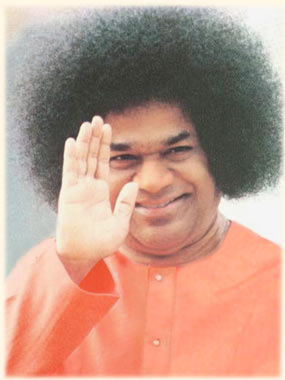 The following is an article which appeared in The Pioneer. The false cases on Sai Baba could not stand legal scrutiny and thus the accuser withdrew his complaint. Below are the excerpts from the article.
On March 14, a lingering, insidious smear campaign against Sathya Sai Baba quietly fizzled out when Channel Nine MSN removed a biased anti-Baba broadcast from its official Website. Ardent Sai defamer Robert Priddy admitted on his blog that Channel Nine MSN “would not have removed the video had there not been legitimate complaints about the content and disinformation in their video”.
Sai Baba devotees following the so-called sex scandal case were gratified to find that over the past few years many accusers were exposed as liars and worse. The main accuser, who inspired a BBC documentary, withdrew his California court case against the Sai Baba Society on realising exposure was nigh.
As usual, when false accusations are made against Hindu gurus, a high-decibel media campaign begins. But when the innocence of the accused is established, the cacophony melts into stoic silence. It is to the credit of devotees that anti-Sai Baba information has been purged from US Government and UNESCO Websites, among others.
Mr Alaya Rahm’s sexual abuse allegations against Sai Baba gained international notoriety when featured on the documentaries, Seduced By Sai Baba and Secret Swami. His allegations were published in Britain (The Daily Telegraph) and India (India Today). Mr Rahm filed his lawsuit, Alaya Rahm vs Sathya Sai Baba Society, in the Superior Court of California on January 6, 2005 (Case No. 05cc01931).
The trial was set for April 28, 2006, but on April 7 the plaintiff self-dismissed his own lawsuit. He attempted to sue for money damages, but no offers of settlement were made and no money or other consideration was paid; the case was dismissed “with prejudice” and is binding under the international doctrine of res judicata. This means Mr Rahm can never file another lawsuit against Sathya Sai Baba, in the US or in India, for the same claims made in this case.
Mr Kreydick signed his typed deposition on April 7, 2006. The same day, the defendant (the Sathya Sai Baba Society) filed Mr Kreydick’s deposition as part of the official record, and Mr Rahm self-dismissed his case! Obviously, he did not feel confident to take his case to trial, though he was represented by an experienced sexual abuse trial lawyer.
Further, in Form Interrogatory No. 6.3, Set One, Mr Rahm admitted to being a daily user of illegal street drugs and alcohol from 1995 to 2005. Thus, throughout his allegations and the filming of the BBC Documentary Secret Swami and the Danish Documentary Seduced By Sai Baba, Mr Rahm was under the influence of illegal street drugs and alcohol. This was suppressed from the general public by his family and anti-Baba associates.
Who inspired these venomous former devotees to launch investigations into vile rumours? Devotees say the ‘Anti-Sai Movement’ is an extremist hate group which habitually makes wild allegations, including the laughable claim that the Baba is allied with terrorists! One magazine published a fake picture of Sai Baba holding hands with Idi Amin!
The truth is that neither Sai Baba nor any organisation associated with him has been charged or implicated for sexual abuse, either directly or indirectly, and that reputable media agencies and independent journalists have not been able to confirm a single instance of sexual abuse linked to Sai Baba or his organisations. Gutter allegations tend to choke on their own stink.
for full article read Source: The Pioneer
Wednesday, April 1, 2009
Radioactive Gas No Match For Agnihotra
 The following is a news item in The Hindu dealing with how a family regularly performing Agnihotra remained unaffected during the Bhopal Gas Tragedy in 1984.
Madhya Pradesh: The tragic incident occurred on the night of December 3, 1984 when the poisonous MIC gas leaked from Union Carbide factory at Bhopal. Hundreds of people died and thousands were hospitalized but there were two families – those of Shri Sohan Lal S Khushwaha and Shri M.L. Rathore, living about one mile away from the plant who came out unscathed. These families were regularly performing agnihotra (havan). In these families nobody died, nobody was even hospitalized despite being present in the area worst affected by the leakage of the toxic gas. This observation implies that agnihotra is a proven antidote to pollution.
Source: English Daily-“The Hindu’ of 4-5-85; news item under the heading ‘Vedic Way to Beat Pollution’.
Tuesday, March 31, 2009
Cognitive Development in Temple Going Children
 The following is an abstract of a paper which deals with effect of going to temples on children. Really interesting
Temple Ecology and Cognitive Development: A Report from South India
R. Muralidharan
Department of Educational Psychology, National Council of Educational Research and Training, New Delhi, India
Ashok K. Srivastava
Department of Psychology, National Council of Educational Research and Training, New Delhi, India
The impact of growing up in the vicinity of Hindu temples on cognitive development was studied in the southern part of India. Enrolled in Grades 1 and 4, the participating children (N-281) were drawn from three kinds of ecology, i.e., families intimately associated with temple, families that are religious but not so intimately associated with temple, and families in non-temple areas, using a cross-sectional design. NCERT School Readiness Scale and Das-Naglieri Cognitive Assessment System were used to assess their cognitive development. Children associated with temples emerged to be more cognitively competent than other two groups of children on both points of schooling. Sex differences and their interaction with ecology were not significant for most of the measures. Results point to the role of temple institutions in shaping development of children byproviding rich and variegated ecology.
Saturday, March 28, 2009
Princeton University to hold “Hinduism in the 21st Century” week
 A special week of events at Princeton will focus on Hinduism in 21st Century America. Princeton University’s Hindu Life Program and student group Princeton Hindu Satsangam are collaborating to host ten separate events packed into one week of celebration and awareness. The series of events - which range from lectures and discussions to performances and yoga demonstrations - will be held from Saturday, March 28, to Sunday April, 5.
The week explores the intersection of India’s ancient spiritual traditions with the modernity of American life. Organizers hope that the theme will not only resonate with members of Princeton’s Hindu community, but also serve as an impetus for those from the broader community to learn more about the faith.
“In presenting such a variety of programming, we wish to convey the diversity within Hinduism itself,” said Vineet Chander, Princeton’s Coordinator for Hindu Life and principal organizer of Hinduism in the 21st Century. “At the same time, we hope that each event will allow us to go deeper in exploring our theme, and gain insight into the faith as a fluid, living tradition faced with both challenges and opportunities in the modern world.”
Highlights of the week include a field trip to one of the first Hindu temples established in the United States, a panel discussion exploring the tensions between the academic and practitioner’s approaches to Hinduism, a coffee-house-style discussion about Hinduism’s take on the real-life struggles faced by American college students, and a student-driven arts festival. Hinduism in the 21st Century also pays homage to the popularity of yoga and spiritual vegetarianism - perhaps Hinduism’s biggest contributions to American pop-culture - with an interactive yoga class and a discussion of Hinduism and animal rights, held jointly with the Princeton Animal Welfare Society.
The week’s climax is a formal dinner, featuring a key-note address by Dr. Uma Mysorekar, president of the Hindu Temple Society of North America. Earlier this year, Dr. Mysorekar offered a Hindu benediction at President Obama’s inauguration–the first time in history that a Hindu prayer was offered at a presidential inauguration. Princeton’s Hindu Life program will also honor Dr. Mysorekar with its first annual Hindu-American Inspiration of the Year Award.
Source: HPI
Thursday, March 26, 2009
Subscribe to:
Posts (Atom)